
fosters compassion,
and strengthens resilience
Attachment-focused EMDR is a variation that integrates attachment theory
Developed by Laurel Parnell, PhD, this approach emphasizes the therapeutic relationship as foundational for healing, as well as meeting the individual wherever they are in the process of recovering from trauma. Diverging from traditional EMDR techniques—including the use of a variety of bilateral stimulation (self-tapping, therapeutic tappers, audio etc) as alternatives to eye movements—Attachment-focused EMDR promotes connection and compassion as part of healing.
There are many recipes and different types of cooks. Some prefer to measure, time and follow a recipe exactly. Others may sprinkle a little of this, perhaps substitute something else when out of an ingredient, and may even veer off the recipe completely only using it merely as a source for inspiration.
The latter describes me…I embrace creativity and respond to what’s present, rather than staying within the confines of a recipe or protocol. With therapeutic concepts and techniques, I remain flexible focusing on what works—and I am more than willing to pivot away from what does NOT work—to support the healing of each unique individual.
Since I predominantly support Asian Americans and BIPOC, I am also acutely aware of how limited data we may represent in research that became the basis for EMDR protocols. Therefore, Attachment-focused EMDR is something I adapt, weave in with somatic approaches and hold loosely for when it could be beneficial for you.
Bilateral stimulation as a supportive EMDR tool
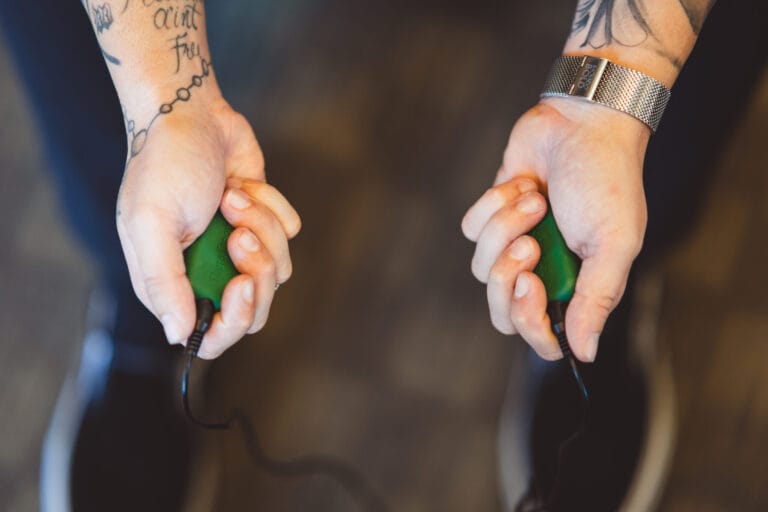
Discovering what form of bilateral stimulation suits you will be part of our experimentation. Bilateral stimulation has been found to help with nervous system regulation, adaptive information processing and perspective-taking inherent to any form of EMDR. Some find using therapeutic tappers calming, while others don’t like them. Some find that tapping their fingers, on their own arms or legs, even their feet, gives them more of a sense of control or agency over the process. Whereas some benefit from audio at specific frequencies. Each individual’s nervous system responds differently.
Attachment-focused EMDR integrated into ongoing therapy
Using trauma-informed approaches, I get to know you slowly. Instead of trying to take a whole history in an intake session—which can be too triggering for some—I want to know what first brings you to therapy with me, what’s been helpful in the past and your goals for our work together. Over the course of us getting to know one another, I will introduce mindfulness and tools to support more awareness of your somatic experience.
While building mindfulness skills and awareness of your patterns, we likely will explore inner conflicts where you have the opportunity to learn about different parts. Learning to acknowledge and be in relation to parts, as well as distinguishing Self, we will be building a trusting relationship along the way, in which you feel safe enough to move towards potentially more challenging material for us to explore together. In this way, together we become familiar with your nervous system, along with your capacity to identify and be with emotions as well as sensations. Also, I will be listening for particular opportunities and incidents to incorporate Attachment-focused EMDR.
Attachment-focused EMDR and support
First, we will spend time deepening an experience of feeling calm, at peace or at ease. Sometimes I hear that the waiting room is calming, or the aesthetics of my office are comforting, and together we notice how your body settles. If you’re willing, I may introduce bilateral stimulation too. We may need to repeat this in sessions, especially if you aren’t able to access it on your own in between our meetings.
Since traumatic experiences often result from a lack of support, I will also ask about supportive people, animals, places in nature, spiritual figures, ancestors both known and unknown, real and imagined etc. Even if you feel conflicted about leaning on external support, there has got to be something that has helped you get through tough times! Sometimes the process of identifying support can take time, a process which in and of itself can offer a lot to work with in therapy.
Having support in place is foundational before we can move towards reprocessing traumatic memories. In addition, we will work on developing your skills to be able to: name emotions and sensations, occupy a state of mindfulness to explore relationships between parts (or conflicting impulses), tolerate waves of emotional responses, especially with some intensity, as well as perspective-taking where you may arrive at different views on how see yourself, others and the events that occurred.
Affirming qualities with Attachment-focused EMDR
We may spend time where you connect with, or re-connect with, affirming qualities, whether they are qualities you see in others or have felt in yourself. For example, you may struggle with performance anxiety and want to find ways to be more steady and better support yourself. I may ask you to recall a time where you felt positively about giving a presentation or speaking in public, or admired how someone else did so. Exploring the feelings and sensations experientially deepens your awareness of desired qualities, making them more readily accessible to you. Between sessions, you’ll be asked to test them out, which may lead to more we need to explore together.
Often as a result of reprocessing traumatic incidents, such life-affirming energy naturally emerges, supporting post-traumatic growth. Recovering from trauma can be a supportive process to shore up your strengths, help you embody greater confidence and stay connected with your resilience.

“Fanning the flames of belonging will be the challenge of your generation, for mine has forgotten what it is to take for granted that we deserve to feel safe in our bodies, to have connections within our communities, and to have a home here on earth.”
—Annahid Dashtgard, author of Bones of Belonging